

Plenty of houses built in the mid 1960s and early 1970s look normal inside. The switches work, the outlets hold a plug and nothing seems wrong. Behind some of those cover plates, though, there is solid aluminum branch circuit wiring. Builders used it when copper prices jumped during those years. The wire itself is not the main problem. The trouble starts at every point where it connects to something else.
A typical home has dozens of these connection points, so the repair work is specialized. Electrical contractors such as NJC Electric fix aluminum wiring with COPALUM certified connectors. They also do related work that often comes up in houses from that period, such as removing knob and tube wiring and upgrading panels. Whoever does the job, it helps to understand what is going on inside your walls before you ask for a quote.
The U.S. Consumer Product Safety Commission has studied this hazard for decades. Its guide on repairing aluminum wiring is still the reference most electricians and home inspectors use. The key finding is worrying. A survey done for the agency found that homes wired with aluminum before 1972 were 55 times more likely than copper-wired homes to have at least one connection reach fire hazard conditions.
Why Aluminum Behaves Differently at a Terminal
Aluminum expands and contracts more than copper as it heats and cools. Each time a circuit carries a load, the wire under a screw terminal swells a little and then shrinks back. Over thousands of cycles, that movement slowly loosens the connection.
Aluminum is also softer. Under the steady pressure of a screw, it slowly deforms, which electricians call creep or cold flow. A connection that was tight on installation day can end up loose years later without anyone touching it.
Then there is oxidation. Exposed aluminum forms a thin oxide layer that resists the flow of current. Add the brass and steel used in many older outlets and switches, and you get a mix of metals that react with each other at the contact point.
Put together, these effects create a loop. A slightly loose connection heats up. Heat speeds up oxidation. More oxide means more resistance, and more resistance means more heat. The damage builds up, which is why a problem can take years to show.
The Signs Are Easy to Miss
One of the most frustrating things about failing aluminum connections is how little warning they give. The CPSC points out that they rarely produce easily noticed symptoms, so a home can seem fine right up until a device chars.
When there are clues, they tend to be small. A cover plate may feel warm even though nothing heavy is plugged in. You might notice a faint smell of hot plastic near an outlet. Lights may flicker or dim for no clear reason. An outlet may work one day and not the next. Any of these is a reason to shut off that circuit and have it checked, not something to keep an eye on for a while.
The bigger point is that no symptoms is not proof of safety. Many hazardous connections are found only when someone opens the box.
Checking Whether Your Home Has It
The simplest check is the cable jacket. In an unfinished basement, an attic or near the panel, look for “AL” or “ALUMINUM” printed on the outer sheathing. Inside the panel, aluminum conductors look silver rather than copper colored, but only an electrician should remove the panel cover.
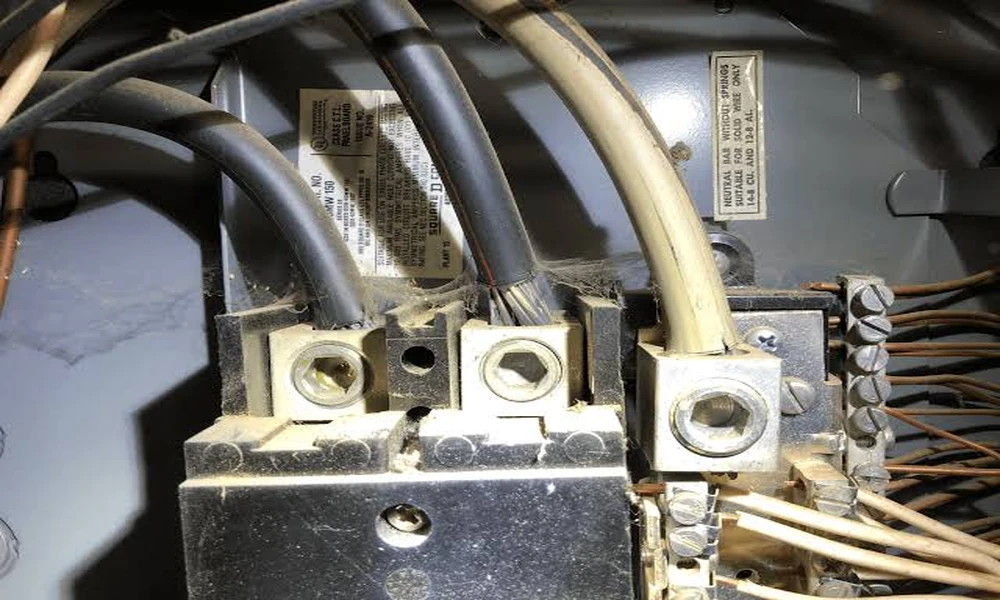
The difference between circuits matters. Large stranded aluminum cables are still common for service entrance lines and some big appliance feeders, and they are a different issue. The concern here is the small solid wire on ordinary 15 and 20 amp circuits that feed outlets, switches and light fixtures.
Repair Paths That Hold Up
There are not many recognized permanent fixes, and each one has trade-offs.
Rewiring with copper. Replacing the aluminum branch circuits removes the problem completely. It is also the most invasive and expensive option, because it usually means opening walls and ceilings in finished rooms.
COPALUM crimp pigtails. In this method, a short length of copper wire is joined to each aluminum conductor with a special crimp sleeve. A dedicated tool makes the crimp, and it forms a joint that holds up against loosening and oxidation. Only trained installers using the manufacturer’s tooling can do it, which is part of why few contractors offer it.
AlumiConn connectors. These are small set screw lugs built to join copper and aluminum. The CPSC also recognizes them as a permanent repair when they are installed to the correct torque.
It is just as useful to know what does not count. Standard twist-on connectors, including colored ones sold for aluminum to copper splices, are not on the CPSC’s list of permanent repairs. Outlets and switches labeled CO/ALR are a partial step at best. They help at the device itself but do nothing for splices in junction boxes, light fixtures or hardwired appliances.
What the Work Looks Like in a Real House
A proper remediation job starts with a full survey. The electrician opens every outlet, switch and fixture box, plus the less obvious spots: ceiling lights, bathroom fans, the dishwasher junction box, the water heater connection and any splice hidden in the attic. Leaving even one connection untreated keeps part of the risk in place.
For a mid-sized home, pigtailing usually takes a day or two rather than weeks. Because the work happens inside existing boxes, there is very little drywall damage compared with a full rewire. Ask for written documentation of each circuit treated and the method used, because the paperwork matters later.
The paperwork matters because aluminum wiring often comes up during insurance applications and home sales. Some insurers ask for proof of remediation before they will write or renew a policy, and buyers’ inspectors routinely flag unremediated aluminum. A clear record turns a possible deal breaker into a minor note in the report.
Living With It Until the Repair Is Scheduled
If you have just found out your home has aluminum branch circuits, a few habits lower the risk while you wait. Do not swap outlets or switches yourself, because most standard devices are rated for copper only. Avoid running space heaters or other heavy loads on circuits you suspect. Test your smoke alarms and replace any that are past their service date. Treat any warm cover plate or burning smell as urgent and turn off the breaker for that circuit.
Aluminum wiring is not a reason to panic or to walk away from an otherwise solid older house. It is a known problem with known fixes. Homeowners who have their connections surveyed and properly repaired can expect the wiring to keep working safely for years.