

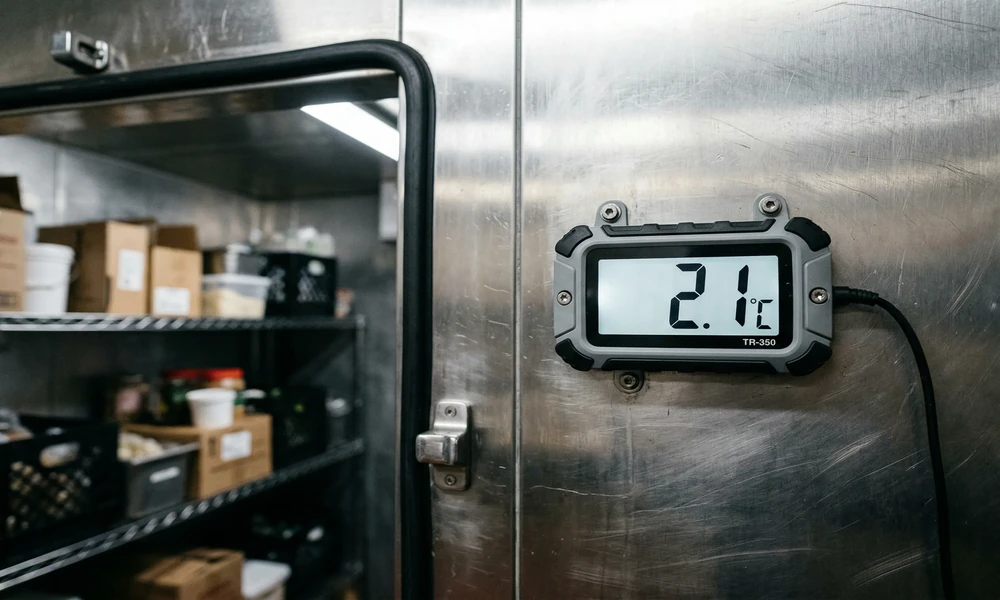
Forty-one degrees Fahrenheit is the line that matters in a commercial kitchen. The FDA Food Code sets 41°F (5°C) or below as the cold holding limit for time and temperature controlled foods such as dairy, cut greens, cooked rice and raw proteins. Once a walk-in lets product creep past that number, the question shifts from equipment performance to whether the food can still be served at all, and the cooler’s air thermometer reading does not settle it. Only a probe in the food does.
Walk-in coolers and freezers rarely quit without warning. They drift, frost over, sweat and run longer for days or weeks before they fail outright. In the Triangle, long stretches of humid summer heat push rooftop and side-yard condensing units hardest exactly when restaurants, caterers and grocers are busiest, which is why the early signs below tend to surface between June and September.
Catching those signs early is the core of the commercial work at 6 & Fix, whose Raleigh refrigeration services cover walk-in cooler installation, commercial cooler repair and refrigeration support built for food service operations, from restaurant kitchens to larger cold storage rooms. Technicians check box temperatures, coils, drains, gaskets and refrigerant circuits so small faults get fixed before a full load of inventory is at risk. If any of the warnings below sound familiar, call the team to schedule a cooler inspection.
1. Temperature Drift
Temperature drift. The box holds 36°F in the morning, reads 39°F by lunch and hovers near 42°F after the dinner rush, then recovers overnight. The thermostat setting has not changed, but the system can no longer pull down the heat load it used to handle.
Drift is the warning most closely tied to food safety because the danger zone starts at 41°F. Product near the door and on upper shelves warms first. Call a technician when two or three days of logs show the same upward pattern, even if mornings look normal.
2. Ice Buildup On The Evaporator Coil
Evaporator icing. Frost forming on the coil inside the box blocks airflow across the fins, so the unit runs constantly while delivering less cold air. Common causes include failed defrost heaters or timers, low refrigerant and doors left open long enough to flood the box with humid air.
A coil encased in ice cannot cool product, and temperatures climb quickly once airflow stalls. Light frost that clears during a defrost cycle is normal. A solid white block that keeps growing calls for service the same day.
3. Door Gasket Wear
Gasket failure. The rubber seal around the door cracks, tears or flattens, letting warm kitchen air seep in around the frame. Frost along the door edge, condensation on the outside of the panel and a door that swings open on its own are typical clues.
Leaky gaskets raise the load on every component and pull in moisture that feeds coil icing. Food stored near the door sees the widest temperature swings. Replacing a gasket is inexpensive, so it is worth booking as soon as daylight shows through the seal with the light off inside.
4. Short Cycling
Short cycling. The compressor starts and stops in rapid bursts instead of running steady cycles. Faulty controls, an overcharged or undercharged system, or a compressor overheating on its safety limit can all cause it.
Every start strains the compressor, and a system that never runs long enough may not pull the box down to temperature. Short cycling often comes before a compressor failure, which is the most expensive repair on a walk-in. Schedule a diagnostic promptly rather than waiting for the unit to stop.
5. Condenser Coil Fouling
Condenser fouling. The outdoor or top-mounted coil that rejects heat collects dust, grease, cottonwood fluff and pollen. A fouled coil cannot shed heat efficiently, so head pressure rises and the system works harder for less cooling.
This problem compounds in a Raleigh summer, when the condenser already faces hot, humid air. Units near kitchen exhaust fans load up with grease even faster. Coil cleaning belongs on a routine schedule, and a unit tripping off during afternoon heat needs attention right away.
6. Refrigerant Leak Signs
Refrigerant loss. Oily residue at fittings, hissing near the lines, bubbles in a sight glass and steadily longer run times all point toward a leak. Topping off the charge without finding the leak only delays the next failure.
Leaks also carry compliance weight. Under EPA leak repair requirements, owners of commercial refrigeration appliances holding 50 or more pounds of ozone depleting refrigerant must take corrective action when the annual leak rate exceeds 20 percent. Only certified technicians should handle refrigerant, and a suspected leak should be inspected before the box loses temperature.
7. Water Pooling On The Floor
Drain blockage. Defrost water normally runs out through a drain line. When that line clogs or freezes, water backs up into the coil pan, spills onto the floor or refreezes into ice sheets inside the box.
Standing water creates slip hazards and invites mold near stored food, and a refrozen drain often leads to more coil icing. In freezers, a frozen drain line usually means a failed drain line heater. Book service when puddles return after mopping.
8. Repairs Outpacing The Box
End of service life. A walk-in reaches the replacement conversation when compressor work, coil swaps and repeat service calls start approaching the cost of new equipment, or when the box itself shows soft or wet insulation panels, damaged floors or doors that will not seal.
Replacement is also a chance to rethink sizing, especially after a menu change or expansion. For the reach-in units that often sit alongside a walk-in, ENERGY STAR reports certified commercial refrigerators and freezers average about 20 percent better efficiency than standard models, thanks to components like ECM fan motors and high efficiency compressors. A technician can compare repair and replacement costs once the condition of the box and refrigeration system is clear.
Keeping The Cooler Ahead Of Its Warnings
Most of these warnings share a root cause: heat and moisture getting the upper hand on the equipment. A daily temperature log with probe readings from the food itself catches drift before it becomes a discard. Regular coil cleaning, gasket checks and drain inspections keep the system from working against itself, especially through the hottest months. When a warning does appear, acting while the box still holds 41°F protects both the inventory and the equipment, and turns what could be an emergency call into a routine repair.